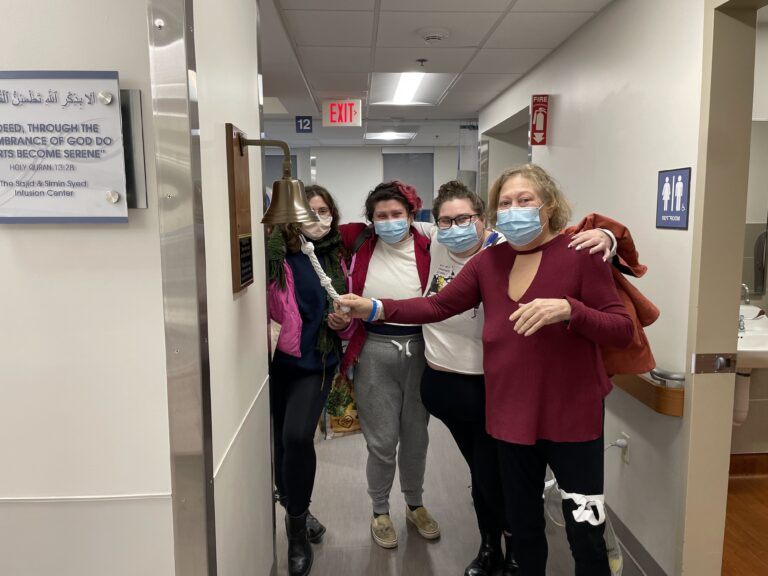
“March Forth!” A birthday poem for Saturn’s return
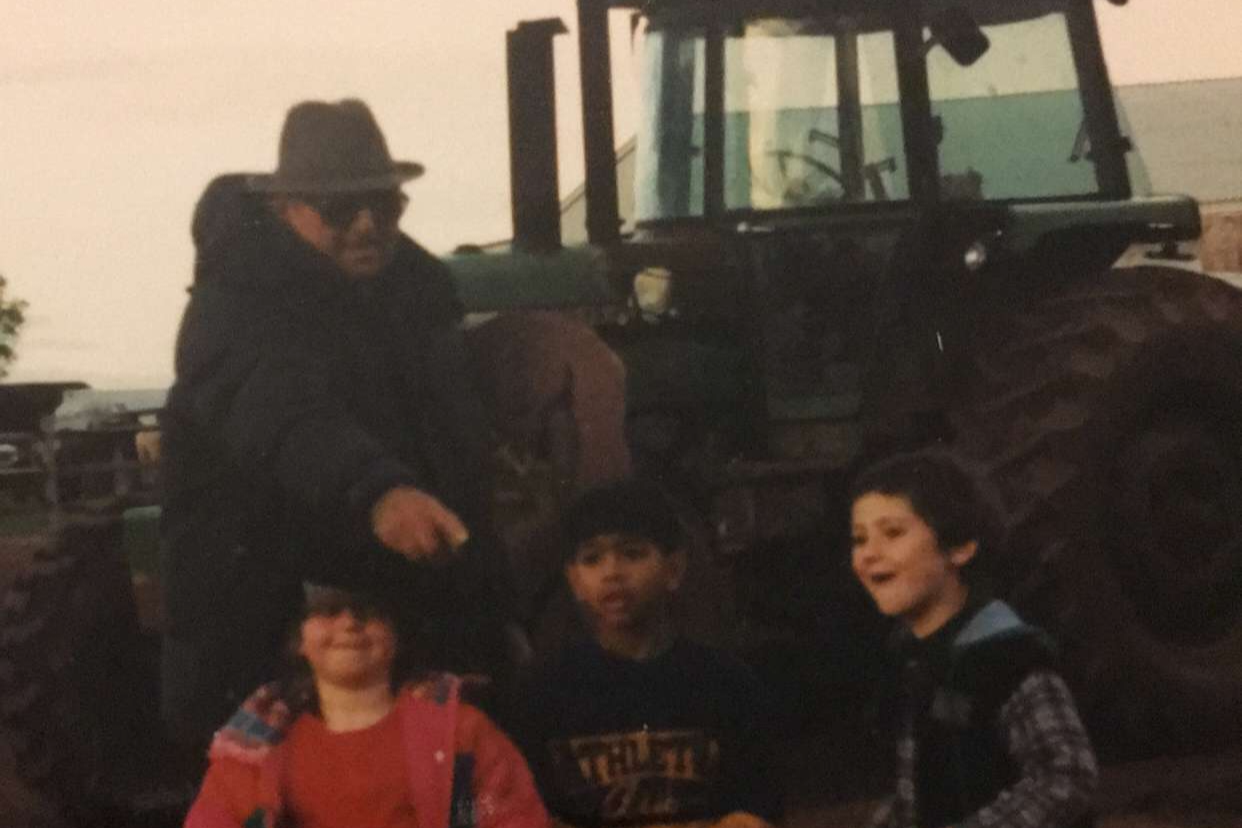
My grandpa, a WWII vet who suffered “shell shock,” always said to me, “Your birthday’s the only date that’s a command.” And it’s served me well.
My friend started to tell me about her near-death experience.
Wading in a 4-foot swimming pool fed by thermal springs in Colorado, her boyfriend interrupted her to say something only two women would have the politeness to tolerate until he finished. Watching her downturned eyes watching fingers trailing in the water, I asked her what happened.
“I was 18,” she said, “and I went with some friends to the beach. They came with me out to the water, but by the time the lifeguards blew their whistles to call us back in, the current was too strong for me to move. I’d been going there my whole life. But this was the first time I felt like I’d drown. I kept reaching for the surface to breathe, and after a while, I didn’t know which way was up.”
In my periphery, I saw a little family enter the pool: a sullen teenage boy, his younger brother, and two parents standing on the side. They, waiting; I, waiting; she, taking a breath.
“I really thought I wasn’t coming out.”
“What was going through your mind?” I asked her, picturing the Pacific blue cold plastering her unrelenting yellow hair to her face, limbs flailing, nostrils filling. I shuddered despite the heat wafting up from the pool.
She shook her head, laughing unbelievingly: Curling in the riptide, tumbling, directionless, thinking of my credit score.
“Your credit score?”
“I had just applied for a loan.” In the silence, I felt the teenager’s listening ears, and I bristled.
“It’s funny,” she said, “cuz I just checked my score today, and it’s where I wanted it to be then.”
I thought of my own comma paycheck deposited in the bank earlier that day. Ten years later, and we are still coming up for air in short bursts.
To my left, the little boy in the little family hopped off the final step into water up to his nose and, in the silence, I turned to look at him. His round eyes were wide, still ignorant of his danger. It creeps in, sometimes slowly, always without warning, and gets louder; but this was dampened by the flow of the hot, deep, nearly opaque water.
I asked him firmly, “Are you okay?” He tilted his head back, freeing his mouth, to answer, but he couldn’t. As I reached over to lift him out of the pool, his mother cried out to mobilize the brother, who sighed in disgust and dropped him forcefully on the top step of the pool. In the briefest pause before a child cries, we waited, embarrassed and eager to forget this moment of unconscionable fear.
After a minute, we decided to go. My friend went to get herself a drink. Her boyfriend joined the cold night air in search of a hotter pool. And I got out, too, glancing back at the family, who had gone about their time in the water with no second look at us.
The near-death-experience epiphany doesn’t always happen.
The experience of hovering over your body as it swirls in the waves like dead-cell foam, or lays prone on the operating table while your secret heart beeps openly in a thin, virtual line—it’s just a narrative, a made-up story by James Joyce and a cadre of Disney executives.
Your spirit may have chosen this exact body before your birth in the hopes of advancing its understanding of… something. Designated your infuriating mother, who has become more herself than ever as her disease takes over her cells, as yours. Escaped the blissful, gray-clouded beyond to teach you the intricacies of the physical self. The stubborn ways of being you were destined to be in this life, all while your lungs breathe without your knowledge. Your own cells puttered away in processes completely unbeknownst to you until your freshman-year biology class; and even then, you were only told the mitochondria is the powerhouse of the cell. You never directly observe the magic the body performs without your knowing. What difference does it make to your fast-twitch muscles flooded with the adrenaline of love and disgust?
You chose your parents, too, but why? When one doesn’t even love himself, and the other takes 30 years to teach you what you knew instinctively at 8: she can’t love you like you need her to. Sobbing alone in your bedroom, you know you can’t save them. You can barely save yourself. But, hey, you try.
Do you know those moments of clarity? When you take the long view of a life and see yourself as an electron whizzing around chaotically, while the whole of humanity, if compressed, would fit in a space the size of an apple. I am waiting to jump to a higher orbital. Standing at the edge of a canyon, at the beck and call of the freaky abyss.
Waiting, standing, acting. How complacent I realize I am, wasting these days and all their seconds. While time’s steely arrow marches on, I’m still with inertia, the rubber-band spring attaching me to the point of it stretching with potential.
It’s going to fling me into this cage of insecurity and fear, the smack of it making me aware, for once, of the bars made of hesitation; know the sound they make when we make contact: the birdsong of a crispy morning before school and the routine, its trill cutting the merengue of dawn like a lemon. The dull crackle of paralysis after a choice I can’t take back: the blunt object’s momentous swing; the tumbling words’ procession; the activated security protocols ringing like a bell as you run. But from what? Why are you running so much?
And you want to feel important, crouching there and obviously visible in the tall grass, naked of a tiger’s camouflage stripes or the anonymity of the zebra clash. Distinct from fulfilling your purpose, you want to experience power: the looking of someone up and down from beneath your midwest-in-the-80s haircut; the longing for their body or their confidence consuming you; in that moment between your looking and their seeing you, your jealousy, and your defiant knowledge of their knowing, you feel alive.
But what if your mind is distinct from your life?
What if it is just a survival invention of the brain? And in this iteration of engineering, it’s designed to protect you from biological harm, the assignment of aging and parental responsibility like a random walk – to accept that future behavior is independent of your past. You may have never lived before. You can barely remember it, after all; all but certain moments feel like a lifetime ago. You have to re-learn that all that was, is, and will be exists simultaneously.
I sometimes realize this is true when I watch TV or a read a book modeled on the differences of our lives. Certain tropes remind me that Earthly human life may be lived in a forward fashion, but that time is not inherently linear.
The longing for a lover your family doesn’t approve. You meet “the one” after you’re married. I may shout at the screen, “Forget society’s rules!” and think to myself, “This character’s so dumb. She’s spent so long fighting off what’ll align her with authenticity, and she’s still not sure. She has her whole life ahead of her.” Don’t I, though, too?
My mother’s dying of cancer—nobody wants to utilize this word. When we do, we add places to our running list of shops where we have cried in public. Furtive glances our way by confused and constipated motherly adults; napkins scratch, blot mascara away – but we don’t run because we have each other and, depending on who you ask, only one of us is in shape.
I read this book that says terminal patients tend to think in terms of decades, not in years, left. The belief in living past your expiry date’s as risky as sipping curdled milk. But in our house, “Here, come taste this” resounds like a chorus on designated Fridge Cleaning Day.
We drink uncertainty at breakfast, impatience and fear for lunch; and during the rare nights when our schedules coincide, we enjoy the delicacy of avoidance, afraid to jostle specific words as though they’re decommissioned landmines. But just in case, we have buried them deep so that, when they explode, our teeth fall out with a tinkle, and we are bewildered why our dinner tastes of rust.
“Oh, and she was such a dynamo inside the kitchen,” they’ll say of her. “And in the bedroom, too, apparently, with her four kids and all. One born four months after her wedding, you know.”
I personally would have shot her groom, knowing what I do know, faster than it takes for you to do this simple mental math. And yet, I lied for our abuser for years, made him sandwiches for the satisfying crunch of his jaws over lettuce that I wished was my head, to better hear the meager approval of the “Yum” that he would rarely have afforded me.
I’m writing this on the back of a to-do list I made on the first day of a working vacation.
I’ve started to call them “trips” because I always work during them, and “vacation” implies no obligations. I “work from home,” or “from my car,” or “the frequent flyers’ lounge,” wherever there’s internet. And in between the hours when I’m exchanging value for money, I rest.
The things on this list are not urgent but are somewhat important; why put things on the list otherwise? Things related to my business, which I built from the ground up, and its expansion. I was on the cusp, I like to tell people, something like an excuse, of growth when my mother got diagnosed. Before that, I’d sacrificed its goals in order to take back my old job in order to qualify for a mortgage, to support her and my sisters during a time of financial uncertainty. I gained 40 pounds in a year. I can barely get through a conversation with one of them without snapping. I can’t answer the question, “Are you okay,” can’t listen to my mother flip-flop one more time between, “I don’t deserve you” and “you don’t deserve this life I gave you.” What else can she mean when she snubs the treasure of my sensitivity, deems my intuition “too emotional,” or takes in the news that I’m leaving her with her unfailing moniker, “Okay, have fun.”
My sisters often tell me to “cut her some slack.” “She may be dying,” their eyes tell me, or at least she’s grappling with this disease. Always somebody trying to drag her down. Why her, why her?
We chose these lives, these particular wombs pulsating with dark embryos we call our own. We chose this guilt, those admonishing husbands’ remarks, the stress. I’ve chosen to stay here while our relationship deteriorates, and now I am choosing to leave, choosing to focus on me and my to-do list. And the cage I have built myself, guided by humanity’s best bumbling engineers, stands open.